About Acoustic Neuroma

In the members section there is a list of the associations medical advisors.

Please use the following links:


What is Acoustic Neuroma?

courtesy of Fred P Nath Consultant Neurosurgeon An acoustic neuroma (or vestibular schwannoma) is a brain tumour which is benign and in most (but not all) cases is usually slow growing.  The cells that form an acoustic neuroma are called 'schwann' cells, and make up the lining of the eighth cranial nerve as it passes through a tiny canal which connects the inner ear to the brain.  Unknown events lead to an overproduction of schwann cells and as they multiply, they form a small tumour which fills the canal.  As the tumour expands, it extends into the brain, assuming a pear shape and putting pressure on the nerves and brain.

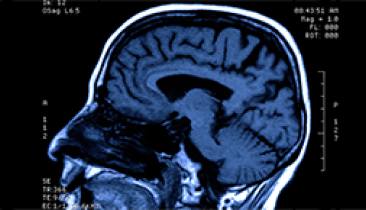
Pictured left is a scan showing an acoustic neuroma

How is Acoustic Neuroma Discovered?

Acoustic neuroma is usually discovered after the patient complains of symptoms such as hearing loss, balance difficulty or tinnitus.  In a few cases the acoustic neuroma has been detected during the investigation of another, possibly unrelated problem, such as may occur if the patient has been involved in an accident.

In rare instances acoustic neuroma may show none of the above symptoms and the patient may only notice some minor symptoms such as facial numbness.

The presence of an acoustic neuroma can be confirmed by the use of sophisticated scanning and imaging techniques.  (See next section).


High Tech Imaging in Acoustic Neuroma Diagnosis.

from a talk by Dr. McConachie.Consultant Neuro-radiologist,Queen’s Medical Centre, Nottingham.A report by Ann Hunter on an interesting talk given to the 1998 BANA Annual General Meeting

Dr. McConachie showed the group several slides of scans that had been obtained using CT (Computed Tamography) and MRI (Magnetic Resonance Imaging). The CT scan shows images of the brain and inner ear structures, giving excellent detail of the bones and middle ear, and is the primary investigation for patients who have deafness because of disease of the bones. Meningioma can be seen clearly on CT scan.
Most large acoustic schwannomas (neuroma) can be detected by CT, although smaller tumours will not usually be seen. The CT scan has been replaced by and large with the MRI scan which improves the accuracy of diagnosis, treatment and follow-up of patients with acoustic neuroma. However, due to limited access to MRI, the CT scan is still widely used.

MRI is used for general imaging of acoustic neuromas, and for deafness problems in general. If a patient has sensory neural deafness, an MRI scan is done to exclude, or confirm, the presence of an acoustic neuroma.

MRI Scanner Thanks to the MRI Centre, The Priory Hospital, Edgbaston for this picture

The MRI scan can show abnormalities of the inner ear and other causes of deafness such as Meniere’s disease. Acoustic neuroma regrowth and fat can be differentiated on the scan, as surgically implanted subcutaneous fat will show up clearly. Cerebrospinal fluid, facial and vestibular nerves, the cochlear and fluid within the cochlear can be seen on the scan and a cross section of nerves can also be seen as they pass through the acoustic canal.

MRI produces detailed images, and has none of the radiation risks associated with traditional imaging. A scan can be ‘enhanced’ by a substance called Gadolinium. This substance is known as a ‘contrast medium’ which is injected into the patient and the tumour, or any other mass, along with blood vessels, are enhanced on the scan. Gadolinium is considered to be very safe, although some people with certain allergies can be affected. The substance will eventually pass through the body and be disposed of through urine a couple of hours following the injection.

The MRI scanner itself is a huge magnet that uses strong magnetic fields. The scanner encircles the patient’s head, which needs to be kept very still whilst the scan takes place, and takes different views of the brain. Any movement of the head can degrade the end result of the pictures.

Although there are usually no hazardous effects with the strength of the magnet that is used, patients who have metal parts in their bodies e.g. cerebral aneurysm clips, and other metal implants such as pacemakers, or metal foreign bodies in the eye, would either have to have the object removed or alternatively be referred for CT scan.
The scan itself is painless and simple although some patients can find the limited space and noise a problem. Staff at QMC are very aware of this and do their best to allay patients fears and make them comfortable. Air blows through the ‘tunnel’ whilst the patient is in the machine and the room is well lit, with music being played. A microphone is used for communication, and there is a prism in the scanner so the patient can see their feet and the room beyond.

Patients at QMC are given information leaflets before the scan informing them of what to expect and a video to watch. Patients are also allowed to take a relative or friend along for support should they wish to do so. Occasionally a very anxious patient can be offered some form of sedation, or even general anaesthetic in the most severe cases.

Waiting lists for the scan do tend to be quite long although the length of time a patient has to wait can depend on clinical urgency. A radiologist who specialises in interpreting MRI, will report on the scan and help the physician to make a diagnosis.This technology has allowed physicians to treat acoustic neuromas earlier, often improving the outcome for patients.


DEATH DEFYING TO DEAF DEFYING:

A brief History of Acoustic Neuroma
By Richard M Irving MD FRCS
Consultant ENT Surgeon, University Hospital, Birmingham.

This article first appeared in the Spring 1998 edition of BANA Headline News Magazine.

Throughout the past one hundred years, acoustic neuroma surgery has moved through a number of significant hanges. In the early days the debate surrounding the decision to operate concerned the question of the preservation of life, whereas today the expectation is for the total tumour removal with a minimum of complications, and in some cases even the preservation of hearing.

Prior to 1890 reports on acoustic neuroma considered only the clinical course of the patient and pathological descriptions of the tumour. A post-mortem was carried out by Sandifoot in 1777, and he regarded the tumour as incurable, accessible "neither to medicine or the hand". Further detailed clinical and port-mortem reports followed by Charles Bell in 1830 and Cruveilieber in 1835. As a result of the work of Bell and  others, Neurologists were able to recognise the symptoms and confidently diagnose acoustic neuroma, but only in the late stages of the disease. The latter half of the 19th century also saw the introduction of anaesthesia, an undertaking of bacteriology and asepsis and improvements in medical instrumentation.

The stage was thus set for the first attempts at surgery, and in 1891 Charles McBurney of New York was the first to try to remove an acoustic neuroma. The operation however was not a great success, the cerebellum swelled massively, no tumour was removed, and the patient died 12 days later.

The first successful operation was by Charles Balance in 1894, who took two attempts to remove the tumour. The patient suffered from ulceration of the eye following the operation and the eye was subsequently removed. From the description by Balance it is more likely that his patient had a meningioma not an acoustic neuroma.
The surgeon generally credited with the first successful removal is Thomas Annandale, professor of surgery in Edinburgh. Annandale’s patient was a 25 year old lady who was 3 months pregnant at the time of surgery in 1895. By all accounts she did well following tumour removal and 6 months later delivered a healthy baby.

The dominant figure in acoustic neuroma surgery, and one of the giants of neurosurgery, in the first decades of the 20th century was Harvey Cushing. Cushing worked at John’s Hopkins in Baltimore and published his classic text "Tumours of the Nervus Acoustics" in 1917. At the turn of the century a patient with an acoustic neuroma had two choices, either take increasing quantities of opiates or undergo surgery with an 80% chance of death. Cushing ended the deadly era of acoustic tumour surgery and dramatically changed the situation. Of his thirty patients only 6 died.

Walter Dandy succeeded Cushing at Hopkins and further refined acoustic tumour surgery. However even in the 1950’s the mortality was still close to 20% and virtually every patient suffered from complete facial paralysis. By the 1960’s clinical skills were much more advanced, the significance of hearing loss on one side was understood, and acoustic neuromas could be diagnosed earlier using audiologic screening tests, and X-rays to visualise the inner ear canal and tumour. In a sense the diagnostic skills were in advance of the surgical skills. Since although the tumours could be diagnosed early, the results of surgical treatment were so poor that surgeons often recommended no treatment, until the tumours became life threatening. An advance in surgery was required and it came following the introduction of the operating microscope for acoustic neuroma surgery.

Otologists were now diagnosing acoustic tumours and were developing an interest in their treatment. They had also been using the microscope in middle ear surgery. William House an Otologist working in Los Angeles decided to team up with a neurosurgeon and in 1961 removed the first acoustic neuroma using a microscope. William House re-introduced the translabyrinthine and middle fossa approaches for tumour removal and made remarkable advances in reducing the mortality to less than 1% and preserving the facial nerve in a large proportion of patients.

The last decade had seen the widespread introduction of first CT scanning, and now MRI, to enable the tumours to be detected at a much earlier stage. The microsurgical techniques, and team approach, developed by House have been widely adopted and the morbidity and mortality have been reduced still further, With early detection, skilled removal, and the availability of monitoring of the facial had hearing nerves, in selected cases hearing preservation can now also be achieved.

The last century has been without doubt a time of great surgical advances. But what of the future ? It is difficult to imagine any further significant improvements in surgical technique, so perhaps we need to look elsewhere, to the rapidly developing science of molecular biology for the next great leap forward.